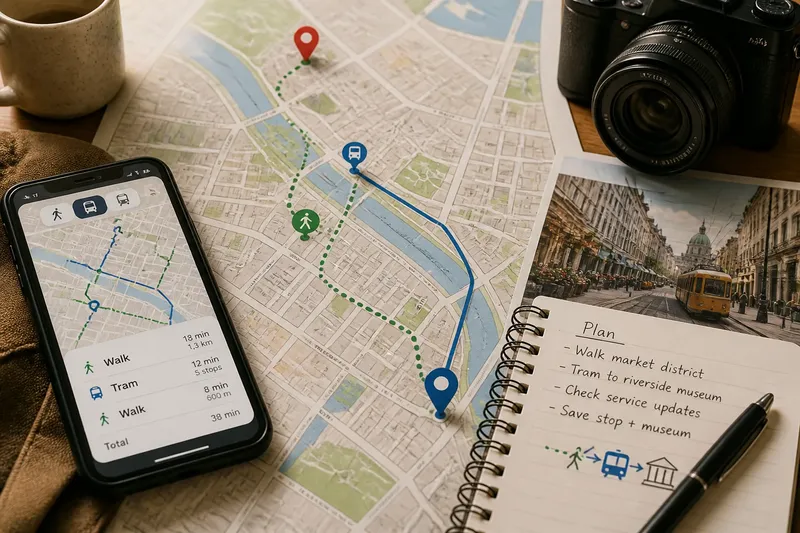
The Shape of a Travel Day: Why One Anchor Plan Helps
A travel day anchor plan gives your outing a clear purpose, helping you choose what matters, adapt when plans change, and leave room for a pleasant detour.
You have a map open at breakfast, three neighborhoods saved, and a timed museum ticket on your phone. By midmorning, every stop feels urgent. A travel day anchor plan can quiet that scramble: choose one main purpose, then let the rest of the day take shape around it.
An anchor is the day’s central reason for going out: seeing a particular garden, meeting a friend for lunch, or spending time in one market district. It is not a packed itinerary or a promise that every other idea must fit. The point is to give the day direction while keeping its edges flexible.
What counts as a travel day anchor plan?
A useful anchor is specific enough to guide a decision, but broad enough to survive a change of pace. “Explore the old harbor” may be too vague if you have no idea what you want to do there; “visit the maritime museum” gives the day a clear center. You can still wander nearby, stop for coffee, or head back early.
Choose one anchor that matters more than the other possibilities. That might be a morning appointment, a scenic ferry ride, a meal with relatives, or a stretch of time in a gallery. If the day has a fixed commitment, that commitment can serve as the anchor; there is no need to add a second major mission.
Before adding anything else, ask: if the day ended after this one activity, would it still feel worthwhile? If the answer is yes, you have a strong candidate.
Why does an overfilled day feel hard to manage?
An overfilled day feels hard to manage because every saved place starts competing for attention. A delayed train or a long lunch can seem to threaten the whole outing, even when the experience you care about is still within reach. With too many priorities, each small change forces another decision.
Map pins can add to the strain. Two places may look close on a screen but involve a long crossing, an awkward transfer, or a tiring uphill walk. Distance alone does not show how much effort the transitions will take.
Separate “the reason for today” from “things I might enjoy if they fit.” Keep the anchor in the first group and optional ideas in the second. A short note on your phone is enough; the categories matter more than the tool.
What if you cannot decide on one main purpose?
Sometimes the problem is not too many plans but too many appealing choices. A landmark, a neighborhood stroll, and a special meal can all sound like the right use of a day. Instead of comparing every possibility, decide what kind of experience you want to protect: quiet, company, art, food, or time outdoors.
Then choose the activity that best serves that intention and is hardest to move to another day. A timed performance may be less flexible than a casual walk; a visit with a local friend may matter more than a shop you could browse later. If nothing stands out, make the anchor smaller, such as spending the morning in one district rather than crossing town for several attractions.
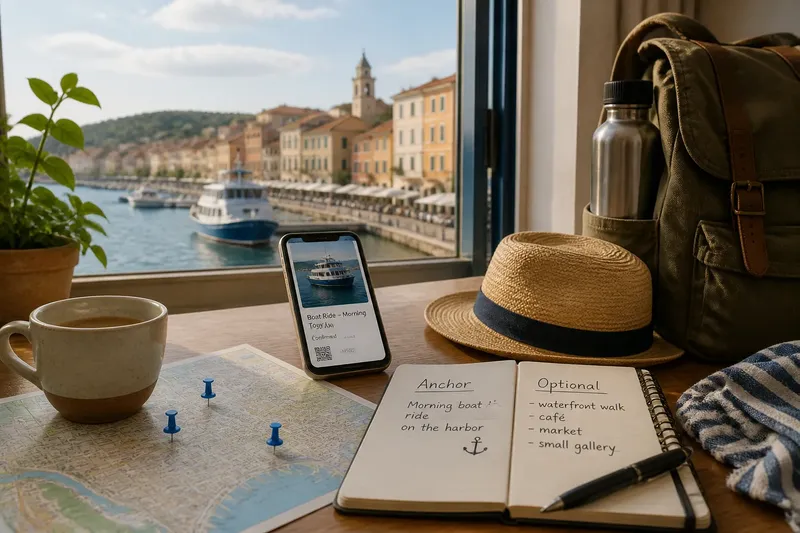
Say you are staying near a waterfront and cannot choose between a gallery across town and a boat ride. You decide that being outside matters most, check the boat’s schedule, and find that a morning departure fits. You make the ride the anchor and leave a nearby café or waterfront walk optional; the resulting plan has a clear start without requiring you to renegotiate every stop.
How do you keep the anchor from becoming a rigid schedule?
An anchor sets a destination for your attention, not a minute-by-minute timetable. Give the main activity a reasonable place in the day, but avoid filling every gap before and after it. A loose plan might be “coffee nearby first” and “see how we feel afterward.”
Keep optional stops close to the anchor when that suits the day. A bookshop on the same street or a park on the walk back is easier to drop in or skip than a distant attraction requiring a separate cross-city trip. The aim is not to stay in one neighborhood every day; it is to avoid making every extra idea carry its own logistical burden.
Leave room for ordinary needs: finding the entrance, getting something to eat, sitting down, or taking a wrong turn. Those are part of how a real day unfolds.
What should you do when the plan changes?
First, identify what has actually changed. If rain makes an outdoor anchor uncomfortable, look for an indoor option that preserves the same intention, such as a conservatory, covered market, or nearby gallery. If a friend is running late, decide whether the anchor can shift or whether a nearby independent activity makes more sense.
Protect the purpose rather than the original sequence. If your anchor was spending time with a particular person, the exact café may matter less than finding a comfortable place to talk. If your anchor was seeing a collection, another part of the museum may still fit, depending on what is open.
When the anchor itself becomes impossible, choose a replacement deliberately instead of trying to rescue every other item. Ask which available option best preserves the day’s intended mood or interest. That decision can keep a disruption from becoming an exhausting search for a perfect substitute.
What questions help you tune a travel day anchor plan?
Can a meal be the day’s anchor?
Yes, especially if sharing the meal or trying a particular cuisine is the main reason for the outing. Build the day around getting there comfortably, and let nearby activities remain optional rather than treating lunch as a brief stop between bigger plans.
Should a fixed ticket or appointment always be the anchor?
It is often a practical choice because its timing already shapes the day. But if the appointment is routine and another experience matters more to you, use the ticket as a fixed point and make the other experience the day’s emotional center.
What if you are traveling with someone who wants a different day?
Agree on one shared anchor, then leave room for separate preferences around it. One person might browse a nearby shop while the other rests, with a clear place and time to reconnect.
How many optional activities should you keep?
Keep only the ideas you can imagine choosing without rushing or making the day depend on them. A short list is easier to use than a collection of every saved pin, and it is fine to leave some possibilities for another day.
How can you tell whether the day has enough structure?
Before heading out, name the anchor in one plain sentence and check the basics: where it is, when you need to arrive, and what could make the plan difficult. For a venue, check its current hours and entry details; for a scheduled activity, confirm the booking information that matters.
Then look at the rest of the plan. If skipping every optional stop would still leave a day you value, the structure is probably doing its job. If the anchor depends on several other activities happening first, simplify the sequence or choose a more self-contained purpose.
The best travel day anchor plan does not account for every hour. It gives you a reason to start, a sensible way to adapt, and permission to stop adding plans once the day already has a center.
Before bed, jot down one thing you would like tomorrow to make room for. That small choice can be enough to meet the morning with direction—and still leave the street free to surprise you.