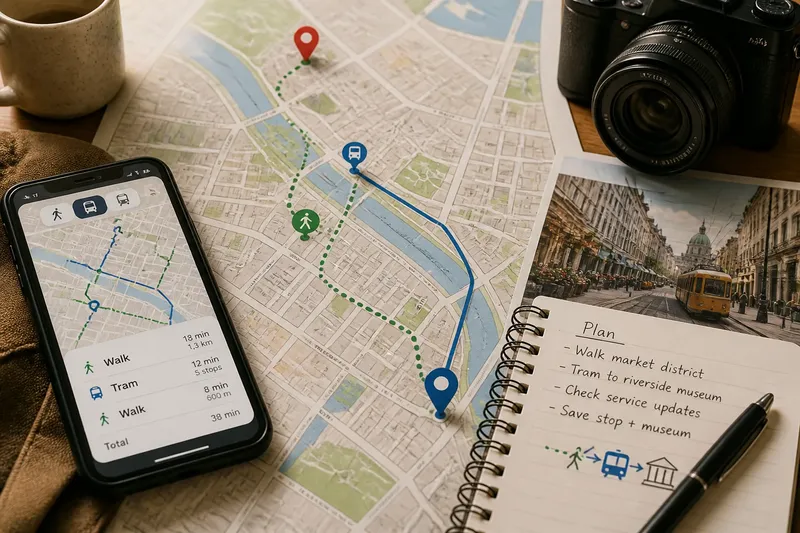
Carry-On or Day Bag: Give Each Bag a Different Job
Carry-on or day bag? Give each a clear role, keep your outing essentials easy to find, and avoid hauling travel supplies you will not use.
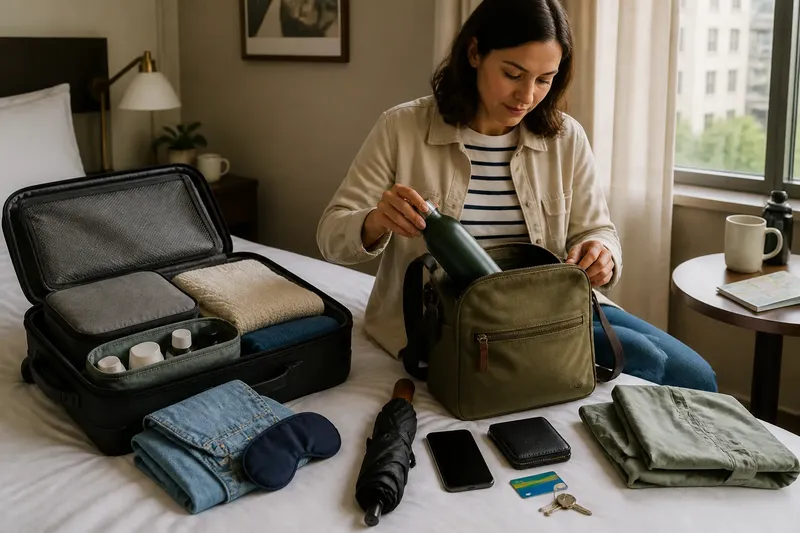
At a museum entrance, you reach for your transit card and find it tucked beneath a spare sweater. A carry-on or day bag works better when each has a distinct job: one holds travel supplies you do not need during an outing, and the other carries what the outing calls for.
The division is about access and use, not just size. A day bag keeps chosen items with you; the carry-on holds the rest of your trip’s kit until you need it.
What belongs in a carry-on or day bag?
Use the carry-on for clothing and supplies intended for later: a change of clothes, sleepwear, a wash kit, and a spare layer. The day bag is for the particular stretch ahead, such as a walk, a gallery visit, or a ride on local transit.
Keep carry-on contents grouped so you can retrieve them without emptying the bag. A packing cube can hold clothing, a toiletry pouch can keep personal-care items together, and a sleeve can protect a book or tablet.
Start the day bag with the plans, not a standing inventory. A city walk might call for your phone, wallet, transit card, water, and a compact umbrella; an indoor gallery visit may need only a phone, small wallet, and reading glasses.
How do I decide what needs to stay close?
For each item, ask: Will I need it before I return to my room? Would it be awkward to retrieve from the carry-on? If both answers are yes, it likely belongs in the day bag. Items meant for the evening or a clothing change can stay in the carry-on.
Payment, identification, transit passes, keys, and a phone often need to be accessible. Keep sensitive belongings in a secure pocket rather than an open outer sleeve, and follow the instructions that apply to any medication or other personal item you carry.
Say you are leaving a hotel for an outdoor market, then taking a train. You expect to buy lunch and check directions but do not plan to change clothes, so you put your wallet, phone, transit card, water, and a thin rain shell in the day bag; spare clothes and toiletries stay in the carry-on. The result is a bag suited to the planned stops, with no need to carry the rest of your kit.
If the plan changes, reassess the contents instead of keeping every item aboard. Add an umbrella if the weather calls for it, or remove an unused layer before a long indoor visit.
Which day bag suits the outing?
Choose a bag that holds the items you expect to use without turning into a second carry-on. A small backpack distributes its load across both shoulders, a crossbody bag keeps its contents close at hand, and a tote makes items easy to reach but may leave them less contained.
Consider the closure and pocket layout as well as the shape. A zipped main compartment keeps items together; a dedicated pocket can make a transit card easier to find. A bottle sleeve is useful if you carry a bottle, but it is not worth choosing a bulky bag that feels awkward to wear.
Load the candidate bag with your planned items and walk around with it. Check whether the straps feel comfortable, the opening is manageable, and frequently used belongings have an obvious place. A bag that feels light when empty may feel different with water, a layer, and a wallet inside.
What should I do with the carry-on while I explore?
When practical, leave the carry-on at your accommodation. If you are between places, a luggage-storage service may be an option; check its conditions and opening arrangements before depending on it.
Pack the day bag before leaving rather than improvising after the carry-on is stored. Keep valuables and items you need with you, and decide in advance whether the day bag can comfortably hold a planned clothing change or purchase.
If both bags must travel, make sure the day bag is manageable alongside the carry-on. A bag that attaches to rolling luggage can help during a transfer, but it should still detach easily for independent use.
How can I avoid duplicating what is in each bag?
Give recurring items a home. A charging cable can stay in the carry-on unless you expect to use it during the day; a transit card belongs in the day bag if you need it often. Duplicate a small item only when the convenience is worth carrying a spare.
After an outing, return reusable items to their assigned places, replenish anything used, and remove receipts or wrappers. This small reset keeps the day bag ready without disturbing the carry-on.
For airline cabin limits or rules about handling a particular item, check the carrier’s current requirements and the item’s instructions before packing.
What questions come up about a carry-on or day bag?
Can a day bag count as a personal item?
That depends on the airline’s rules and the bag’s dimensions. Check the current guidance for your specific journey instead of assuming a familiar bag will qualify.
Should I carry my passport in my day bag?
Keep travel documents secure and accessible in line with your itinerary and the requirements of the places you visit. A zipped inner pocket or secure document holder can keep them separate from snacks and loose items.
Is a backpack better than a crossbody bag?
Neither style suits every outing. A backpack may feel more balanced with water and a layer, while a crossbody can make access simpler; choose according to your load, comfort, and surroundings.
What if I need more room during the day?
Choose a day bag with space for the outing’s planned needs, or bring a foldable tote for a foreseeable extra layer or small purchase. If the carry-on can stay stored, avoid carrying its full contents around.
How should I reset the bags for tomorrow?
Check the next day’s plans and move only the items that suit them. For a long walk, add water and a weather-appropriate layer; for indoor stops, keep the bag spare and easy to carry. Return items you rarely use to the carry-on.
Before heading out, check that the day bag holds the essentials for its specific job and leave the rest behind. The carry-on or day bag choice is easier when each item has a reason to be in the bag that holds it.